The Most Expensive Mistake I See
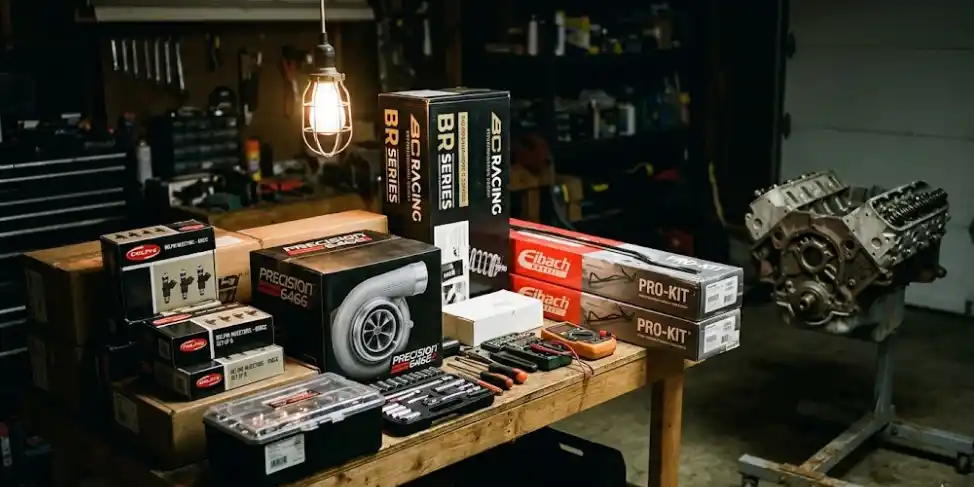
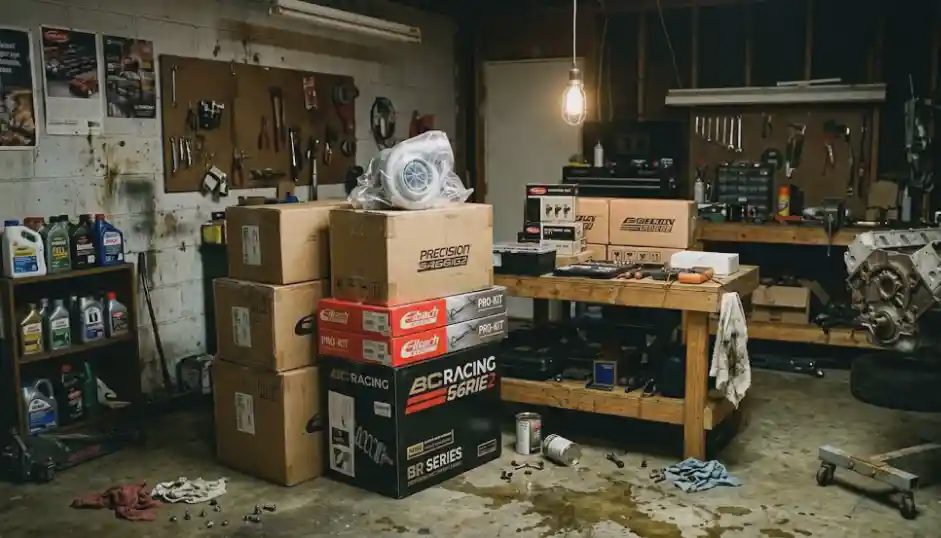
I have walked into shops where a car sits on jack stands, surrounded by boxes. The owner is proud. He points to the turbo kit, the fuel system, the suspension components, the brake upgrade. He has spent more money than he wants to admit. He tells me the horsepower number he expects. He tells me how fast it will be.
Then I ask him one question: “What is this car supposed to feel like when you’re done?”
He does not have an answer. He has a parts list. He does not have a build.
This happens constantly in the performance world. Someone decides they want a “500 horsepower street car” before they have decided what kind of driving they actually do. They copy a forum signature without asking whether the parts work together. They chase peak numbers without understanding what happens at part throttle, in traffic, on a hot day, or at 4,500 rpm on a highway on-ramp.
The result is predictable. The car gets assembled. The car runs. The car is terrible to drive. Six months later, it is either parted out or sold at a loss to someone who will inherit the problems.
A parts list is not a build. A build is a system. And systems require decisions, not just purchases.
What a Parts List Looks Like
The classic formula is easy to spot. It goes like this:
Big turbo kit
Front-mount intercooler
Lowering springs or cheap coilovers
Aftermarket wheels with stretched tires
A loud exhaust
A tune that makes a dyno number
Nothing on this list is inherently wrong. A big turbo is not a bad thing. Lowering springs are not a sin. The problem is not the individual parts. The problem is that nobody asked the question that matters most: what is this car supposed to do?
What a Build Looks Like
A real build starts with an honest answer to three questions.
Question 1: Where am I actually driving this car?
Not where you wish you were driving it. Where you actually are. If you live in Brooklyn and your car sees the BQE, the Belt Parkway, and potholes the size of engine blocks, your suspension choices should reflect that. If your car spends 90% of its life below 45 mph in stop-and-go traffic, your cooling system and clutch choice matter more than your peak horsepower number.
Question 2: What is the car’s job?
A street car has a different job than a track car. A daily driver has a different job than a weekend toy. A car that carries your kids on Saturday morning has a different job than a car that only carries you to a cars and coffee event. Define the job first. Choose parts that serve that job. Do not choose parts that fight against it.
Question 3: What am I willing to sacrifice?
Every modification involves a tradeoff. More power generates more heat. Stiffer suspension transmits more road noise. A lighter flywheel makes stop-and-go traffic more annoying. A louder exhaust drones on the highway. None of these tradeoffs are necessarily dealbreakers. But they must be acknowledged and accepted before the credit card comes out.
A builder who cannot answer these three questions has not started a build. He has started a shopping spree.
The System Check
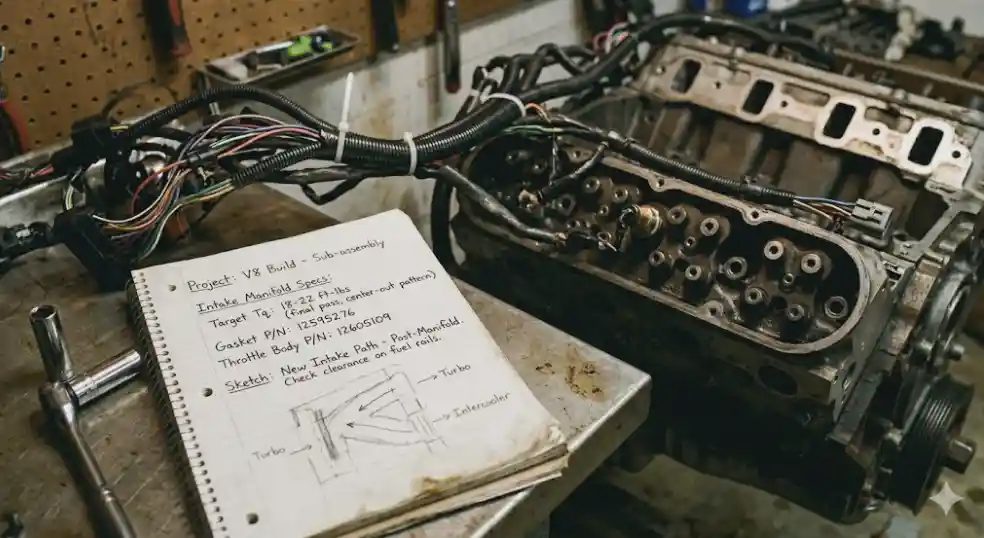
Once the job is defined, every part must be evaluated against a single standard: does it work with the other parts, or does it fight them?
The table below illustrates what happens when you skip this step.
The Part | Chosen Without Context | Chosen for a System |
|---|---|---|
Turbo | Chosen by max horsepower rating | Chosen by compressor map, spool threshold, and thermal load on the cooling system |
Intercooler | Largest core that fits the bumper | Sized for airflow at street speeds, not just peak dyno pulls |
Fuel System | Whatever the forum post said | Pump, lines, regulator, and injectors matched to the engine’s actual fuel demand at target boost |
Clutch | Rated for the torque number | Rated for the torque number plus heat rejection, stop-and-go drivability, and pedal effort |
Suspension | Lowest spring rate that looks good | Spring rate and damping matched to road surface quality, tire compound, and intended use |
Brakes | Biggest rotor that clears the wheel | Pad compound chosen for cold bite and street temperatures, rotor sized for actual thermal load |
Tires | Widest that fits without rubbing | Compound, sidewall stiffness, and tread pattern matched to climate, road conditions, and power level |
A parts list picks items from the left column. A build makes decisions from the right column. The difference on paper looks small. The difference from the driver’s seat is enormous.
The Hardest Conversation
I have had this conversation more times than I can count. A customer walks in with a printed spreadsheet. He has priced everything. He is ready to spend money. He wants me to confirm that his list is good.
I look at the list. I ask the three questions. He answers with what he thinks I want to hear. Then I ask him to drive his car — right now, in its current condition — and pay attention to what actually bothers him.
Is it the body roll? The brake pedal feel? The way the power falls off above 5,000 rpm? The vague steering on center? The fact that it overheats in summer traffic?
Nine times out of ten, the things that actually bother him are not the things his parts list addresses. He wanted a big turbo, but his real problem was tired suspension bushings. He wanted coilovers, but his real problem was brake pads that faded after two hard stops. He wanted 500 horsepower, but his real problem was that the car felt disconnected and lazy.
The most expensive mistake in car culture is not buying bad parts. It is buying good parts for the wrong reasons. A set of Ohlins coilovers is a beautiful piece of engineering. If you install them on a car that sees nothing but potholes and highway expansion joints, you have spent a fortune to make your car worse.
The Rule I Live By
Every build I have ever been proud of started with a period of restraint. I drove the car stock for weeks or months. I identified what needed improvement. I researched parts that addressed those specific weaknesses. I installed them in an order that made sense — supporting mods first, power adders last. I tested the car after each change.
This approach is not exciting. It does not produce dramatic before-and-after videos. It does not generate a dyno sheet worth posting on social media. What it produces is a car that works.
A parts list is a fantasy. A build is a series of mechanical decisions that respect each other. One costs money. The other costs patience, honesty, and the willingness to admit that the internet does not know what your car needs.
You know what your car needs. You just have to drive it long enough to find out.