The Hour That Doesn’t Lie
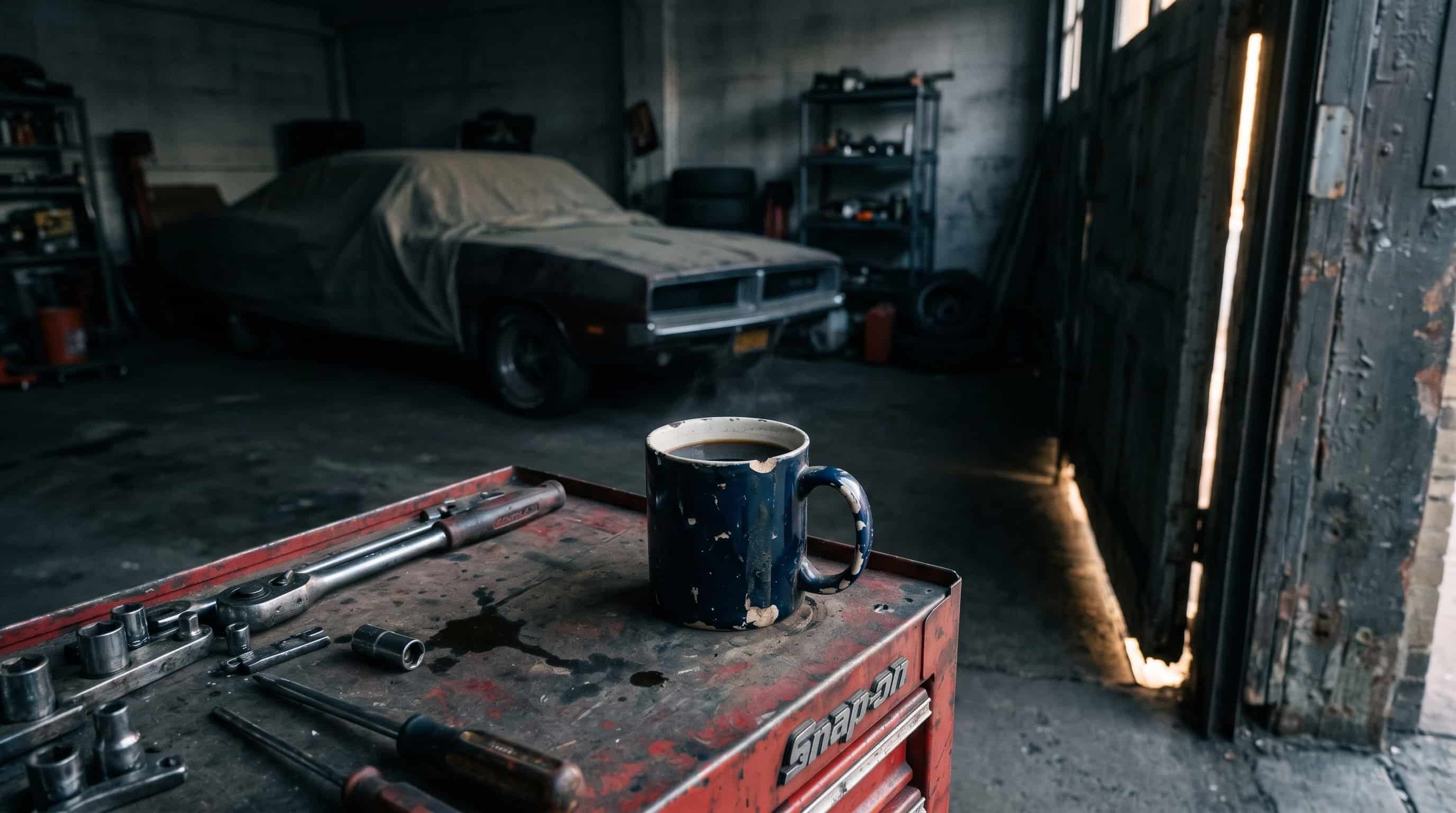
The garage at 5 a.m. does not care about your reputation. It does not care what your car made on the dyno last week, how many followers you have, or how good the build looks on your phone screen. At 5 a.m., the concrete is cold through the soles of your boots, the air smells like old oil and cold metal, and the only thing that matters is whether the engine starts clean and runs right.
I have spent more of these mornings than I can count standing over a workbench with black coffee in hand, listening. Not to music. Not to a podcast. To the car. A cold start is the only test that tells the unvarnished truth about an engine. No heat in the oil. No warmth in the coolant. No masking from a tune that was optimized for a hot dyno room. Just mechanical reality, laid bare in the first ten seconds of combustion.
The coffee is black because anything else is a distraction. Sugar and cream belong to people who treat mornings gently. I treat them like an interrogation. A cold engine is a suspect, and the first start is the questioning.
What a Cold Start Reveals
A lot of builders talk about power. Very few talk about what happens in the first three seconds after the key turns. Those three seconds tell me more than a dyno graph ever will.
The starter engages. The crankshaft rotates. The ECU reads coolant temperature, intake air temperature, and barometric pressure. It calculates a cranking fuel pulse and fires the injectors. If the fuel table is wrong for a cold engine — too lean, usually, because someone copied a hot-start map — the engine stumbles. It catches, then nearly dies, then recovers. The owner thinks that is normal. It is not. It is a tune that was never finished.
If the idle hunts for the first thirty seconds, surging up and down while the ECU chases its own corrections, someone did not dial in the idle air control logic for cold coolant. The tuner spent hours on the wide-open-throttle table and skipped the first thirty seconds of every drive. That is the automotive equivalent of building a house with no front door.
If the engine rattles on startup for a split second before oil pressure builds, the oil filter drain-back valve is failing, or the oil is too thick for the temperature, or the bearing clearances are wider than they should be. The noise lasts half a second. Half a second is enough to start a wear pattern that will finish the engine at 40,000 miles instead of 150,000.
Black coffee and cold starts have something in common. Neither one lets you hide.
The Decisions Made at Midnight
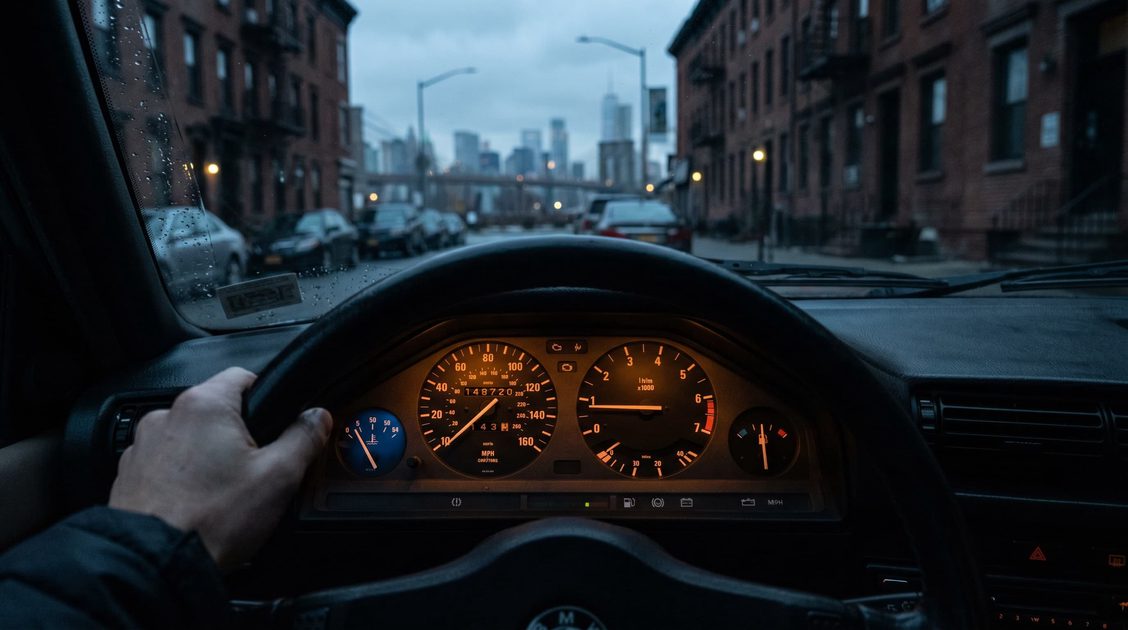
If cold starts happen at dawn, bad decisions happen the night before. I have made most of mine between 11 p.m. and 2 a.m., in the glow of a laptop screen or under a drop light, running on stubbornness and caffeine that should have worn off hours earlier.
The worst one was simple. I was twenty-six, working on my own car, chasing a boost target that made sense on paper and nowhere else. The wastegate spring was too light. Instead of ordering the correct spring and waiting two days, I shimmed the wastegate actuator with washers from the hardware store and added two pounds of boost. It worked. For one night. The next morning, a cold start revealed a misfire that turned out to be a cracked ring land on cylinder four.
Impatience cost me an engine. The two days I refused to wait cost me three months of evenings and a paycheck I did not have to spare. The coffee was black that morning, but it did not make the conversation with myself any easier.
I see this pattern in almost every catastrophic engine failure I have diagnosed. The mistake was not a lack of knowledge. It was a lack of patience applied at the wrong hour. A tuner leaned out the fuel table because he was tired and wanted to go home. A builder reused torque-to-yield head bolts because the new ones had not arrived yet. An owner turned up the boost controller one click past the safe threshold because the car felt strong and the road was empty and the devil on his shoulder sounded exactly like his own voice.
Cold starts hand out the verdict. Bad decisions write the sentence. Black coffee is what you drink while you read it.
The Discipline the Garage Demands
Boxing taught me that the moment you get impatient is the moment you get hit. The ring punishes impulse instantly. A lazy jab, a dropped hand, an overcommitment — and suddenly you are on the canvas wondering what happened. Engines work the same way. They just take longer to deliver the punishment.
The discipline that keeps a fighter safe is the same discipline that builds a reliable engine. You do the work in order. You check the clearances even when you want to button it up. You wait for the parts even when the car is almost ready. You do not turn the boost up until the fuel system is verified and the intercooler is logged and the oil is warm.
My kids taught me a version of this discipline that has nothing to do with cars and everything to do with consequence. When you have two small people waiting at home, a bad decision at midnight is not just your problem. It is a selfishness you cannot afford. So the coffee stays black, the hours stay reasonable when they can, and the car stays on jack stands until the work is actually done.
What the Coffee Is Really For
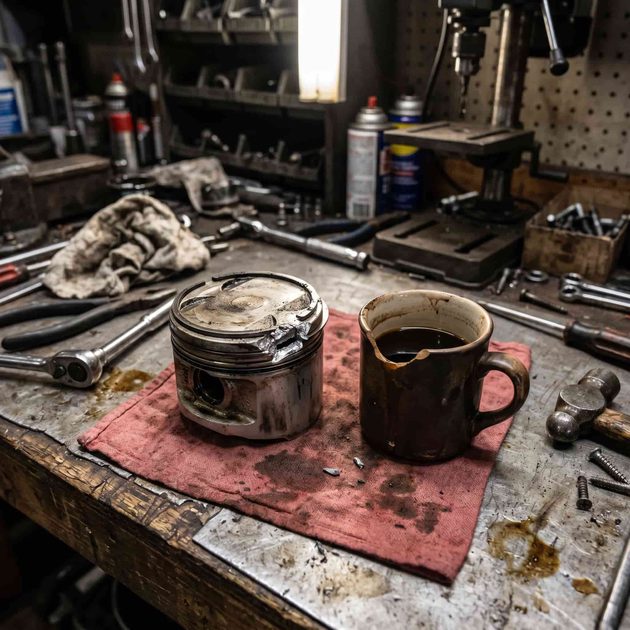
The coffee is not for energy. Not primarily. After twelve years of this work, caffeine is just the background hum that keeps the hands steady and the mind on the task. The coffee is for the ritual. It marks the transition from the world outside the garage to the world inside it. The world outside is noise, opinions, comparisons, internet arguments about horsepower numbers, strangers telling you what your car should be. The world inside the garage is quiet. It is a cold concrete floor, a set of tools, an engine that needs to be diagnosed, and a standard of honesty that does not bend for anyone.
I drink the coffee black because the garage does not reward softening. It rewards clarity. A sharp eye on a spark plug. A steady hand on a torque wrench. A willingness to admit that the thing you spent money on is not working the way you hoped, and that the fix is going to take more time than you want to spend.
The Bottom Line
Cold starts will always be the truth. Bad decisions will always try to happen after midnight. Black coffee will always be there, bitter and unapologetic, while you face the consequences of both.
A good build is not the one that fired up perfectly on the first try and never gave you trouble. A good build is the one that went wrong, taught you something, and forced you to slow down and do it right. The engines I respect most are the ones that broke my heart before they earned my trust.
If you are standing in your own garage at a terrible hour, staring at a problem you created, drinking something strong and black and trying to figure out what comes next — you are not alone. You are just in the middle of the lesson. Finish it.