
A knocking engine is a ticking time bomb. If you've never learned how to diagnose engine knock properly, you're gambling with pistons, rings, and bearings. I've lost count of the engines I've seen destroyed because someone ignored a faint rattle or assumed it was just lifter noise. That metallic ping under load isn't a suggestion—it's a warning. This guide will walk you through what engine knock sounds like, how to tell detonation from pre-ignition, and what tools separate a real diagnosis from a guess.
What Is Engine Knock and Why Should You Care?
Engine knock, also called detonation or pinging, happens when fuel ignites at the wrong time inside the cylinder. Instead of a smooth flame front from the spark plug, pockets of air-fuel mixture detonate violently, creating a shock wave that pounds the piston, cylinder walls, and head. That sound is metal hitting metal. Repeat it long enough and you get shattered ring lands, holed pistons, or a thrown rod.
Pre-ignition is different—it's when the mixture ignites before the spark plug fires, often due to a hot spot like a carbon deposit or an overheated spark plug. It raises cylinder pressure so fast it can kill an engine in seconds. Both are bad, but they require different fixes. That's why knowing how to diagnose engine knock correctly matters. You don't want to throw octane booster at a pre-ignition problem or pull timing for a fuel issue you never had.
What Does Engine Knock Actually Sound Like?
Real knock is a light metallic tapping or rattling that happens under load—usually during acceleration or climbing a hill. It's most audible from the driver's seat with the windows up. If you hear it at idle or steady cruise, you may have piston slap, wrist pin noise, or a loose accessory belt. Those need attention too, but they're not knock.
To find it, take a test drive on a safe road. Warm the engine to operating temperature, then accelerate moderately from about 1,500 rpm. Listen for a rapid, high-pitched ping that correlates with throttle opening. If you hear it, you've got knock. The next step is figuring out why.

Step-by-Step: How to Diagnose Engine Knock
1. Check Your Fuel
Low octane is the most common cause. If you're running 87 octane in a car that calls for 91, expect knock. Try a tank of premium and see if the noise disappears. If it does, adjust your fuel choice and maybe pull some timing for safety.
2. Inspect for Carbon Buildup
Carbon deposits act as hot spots and raise compression. They're common on direct-injection engines. Use a borescope through the spark plug hole to look at the piston crown and valves. Heavy buildup means a cleaning is overdue. A walnut shell blast or chemical treatment like BG 44K can help, but only if the rest of the ignition system is healthy.
3. Evaluate Ignition Timing
Too much advance causes knock. A timing light will show you base timing, but most modern cars manage timing electronically. If you've got a tunable ECU, look at your ignition map. If not, suspect a failing knock sensor that's not pulling timing when it should. A scan tool with live data will show knock sensor voltage and whether the ECU is retarding timing.
4. Check for Vacuum Leaks and Lean Conditions
A lean mixture burns hot and triggers knock. A vacuum leak after the mass air flow sensor (MAF) leans out the mixture. Use a smoke machine or propane enrichment test to find leaks. Also check fuel pressure—a weak pump or clogged filter can cause lean knock under load.
5. Look at the Knock Sensor Data
Most engines have a knock sensor that listens for the vibration signature of knock. On a live data scan tool, you can see the sensor's voltage and the ECU's response. If the sensor shows knock activity but you don't hear it, the sensor may be over-sensitive, or your engine has a mechanical issue like a loose piston that triggers false readings.
Tools That Help Pinpoint the Problem
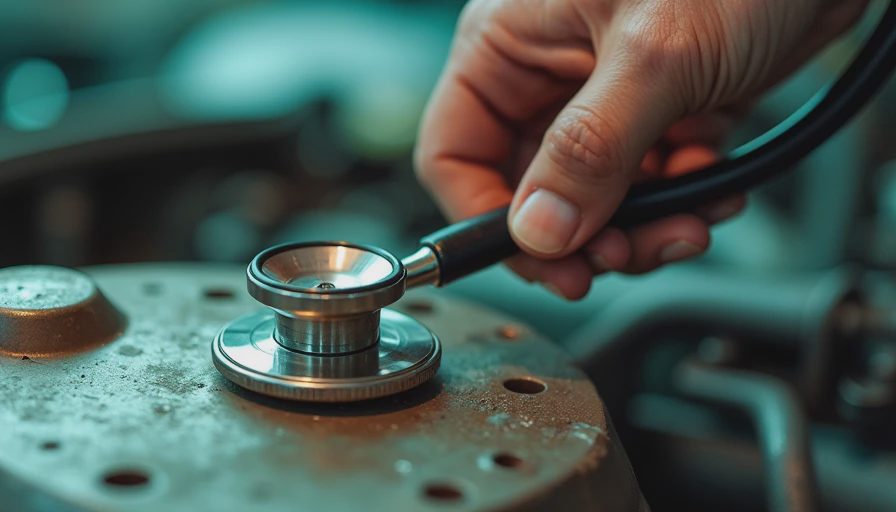
You don't need a full machine shop to learn how to diagnose engine knock, but the right tools save you from guessing. A quality stethoscope with a long probe helps isolate the sound to a specific cylinder. A borescope reveals carbon or physical damage. A scan tool with live data is essential for modern engines—without it, you're flying blind. A fuel pressure gauge and a timing light are older tools that still matter.
What to Do After You Diagnose It
Once you've identified the cause, act. If it's octane, run the right fuel and consider a tune that's conservative for your pump gas. If it's carbon, clean the engine thoroughly and fix the underlying cause—often oil ingestion from a PCV system or poor driving habits. If it's timing or a sensor, fix or replace the component and re-check. If you find mechanical damage like a cracked ring land, the engine needs a rebuild.
Don't just add an octane booster and call it fixed. That's a band-aid, not a cure. And don't ignore knock because the car still runs. I've seen engines that knocked for months before finally letting go—usually at the worst possible time. A real diagnosis costs time and maybe a few hundred dollars in tools. A destroyed engine costs thousands.
Final Thoughts from the Shop Floor
Learning how to diagnose engine knock isn't just about saving an engine—it's about understanding what your car is telling you. The moment you hear that rattle, treat it like a red warning light, not a background noise. If you can't figure it out, get a second opinion from someone who knows what a borescope and a knock sensor are. Your wallet and your safety depend on it. If it only sounds fast, it's already a bad decision.