The Recipe That Does Not Care About Your Roads
The internet hands out build recipes like they are universal. Stage two tune. Track-oriented coilovers. 200-treadwear tires. Big rear sway bar. The parts list is copied from a forum post written by someone who lives fifteen minutes from a smooth canyon road and has never driven through a Northeast winter. The parts arrive. The car gets assembled. And then it hits real roads.
The coilovers crash over bridge joints. The tires never warm up on the six-mile commute. The sway bar makes the rear end step out on a crowned off-ramp. The car that was supposed to feel sharp feels nervous, brittle, and out of its depth. The parts worked. The build failed. It failed because it was built for someone else’s roads.
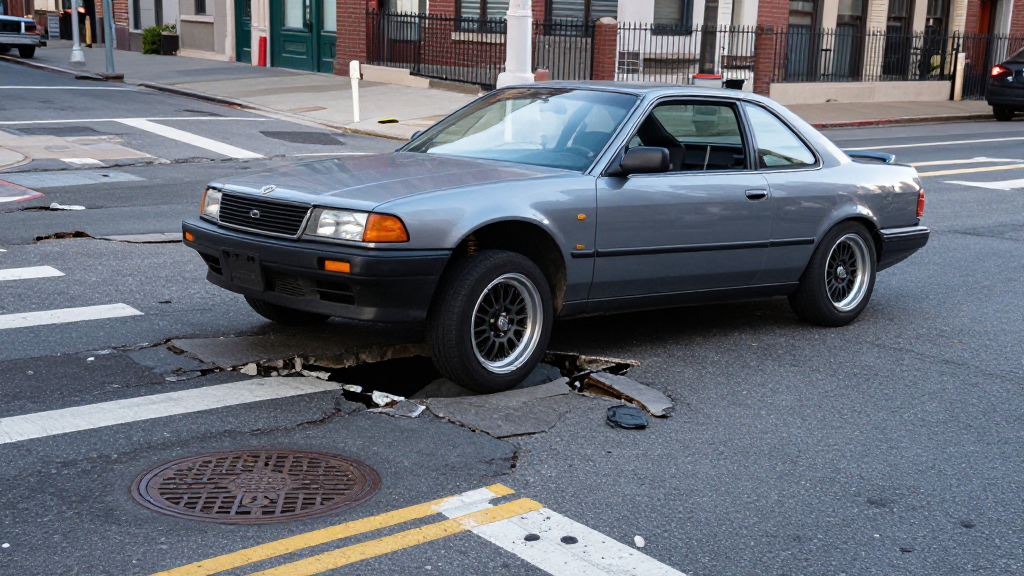
I learned this lesson in the most direct way possible. I tuned cars in New York and New Jersey. Our test roads were not empty backroads with clean pavement and predictable camber. They were the BQE, the Belt Parkway, the industrial stretches of Newark, the pothole-riddled side streets of Brooklyn. A car that worked on those roads had to survive expansion joints that could swallow a tire, standing water that hid a crater, and traffic that reduced any “spirited driving” to a second-gear pull between lights.
A build that cannot handle your actual commute is not a build. It is a compromise you make every morning.

The Four Road Factors Nobody Includes
When I evaluate a build plan, I ask the owner to describe his roads. Most people cannot do it. They talk about horsepower targets and lap times they have never chased. They have not thought about the surface they drive on every single day. Here are the four factors that matter.
Pavement Quality
Smooth asphalt rewards stiff springs and low ride heights. Broken concrete punishes them. If your roads are patched, crowned, rutted, or littered with potholes, you need suspension travel and compliance. A car that skips over bumps is not cornering. It is airborne, and airborne cars do not steer or brake.
Traffic Density
A car that sees nothing but stop-and-go traffic spends most of its life at low speed and part throttle. A large turbo is a frustration, not an asset. A heavy clutch is a leg workout, not a performance feature. A cooling system that only works above 30 mph is a liability. Build for the speed you actually average, not the speed you daydream about.
Climate and Weather
Summer tires below 40 degrees Fahrenheit lose grip. A car without proper cold-start tuning stumbles through the winter. Brake pads that need heat to bite are dangerous in the rain. Your climate dictates your tire compound, your fluid choices, your cold-start enrichment tables, and your intercooler size. Ignore it, and the car will punish you seasonally.
Road Geometry
Crowned roads, off-camber intersections, steep driveway entries, speed bumps, and railroad crossings are not obstacles you avoid. They are features of the route you drive every day. A car that scrapes on its own driveway or bottoms out on a speed bump is not a performance car. It is a car you dread driving.
The Road-Matched Mod Table
Your Roads Look Like | Your Suspension Should Be | Your Power Goal Should Be | Your Tire Should Be |
|---|---|---|---|
Broken urban pavement, heavy traffic | Moderate drop, compliant dampers, stock sway bars | Quick spool, strong midrange, no peaky top end | 300-400 treadwear summer or UHP all-season |
Smooth suburban streets, light traffic | Firm spring rates, adjustable damping, upgraded sway bars | Broad powerband, responsive tip-in | 200-300 treadwear summer |
Winding backroads, elevation changes | Balanced coilovers, corner-balanced, camber plates | Linear power delivery, strong top end | 200 treadwear extreme summer |
Mixed commuting, four seasons, rain and cold | Matched spring-and-damper combo, stock or mild drop | Reliable, heat-managed power, conservative tune | UHP all-season or two sets (summer/winter) |
Highway commuter, long miles, high speed stability | Mild drop, firm dampers, aerodynamic considerations | Strong passing power, low cruising RPM | High-speed-rated summer or all-season |
This table is not a prescription. It is a starting point for an honest conversation about what the car will actually do. The parts that work for a canyon carver in California will not work for a daily commuter in Brooklyn. The parts are not bad. The match is wrong.
The Cross Bronx Test
I used to use a specific stretch of road as a proving ground. The Cross Bronx Expressway is a brutal test of suspension compliance, steering composure, and cooling system performance. The surface is uneven concrete with expansion joints every fifty feet. Traffic surges from zero to fifty and back to zero without warning. The lanes are narrow. The exits come up fast.
A car that felt planted and composed on smooth New Jersey backroads would come apart on the Cross Bronx. The suspension would crash. The steering would tramline. The coolant temperature would climb. The driver would arrive tense and exhausted. The car was fast on paper. It was miserable in reality.
I tuned dampers on that road. I logged intake air temperatures on that road. I tested brake pad cold bite on that road. Because if the car worked there, it would work anywhere in the tristate area. If it did not work there, no dyno number would make up for it.
Every city has a version of that road. Yours does too. Find it. Build for it.
Build for Your Life, Not Your Fantasy
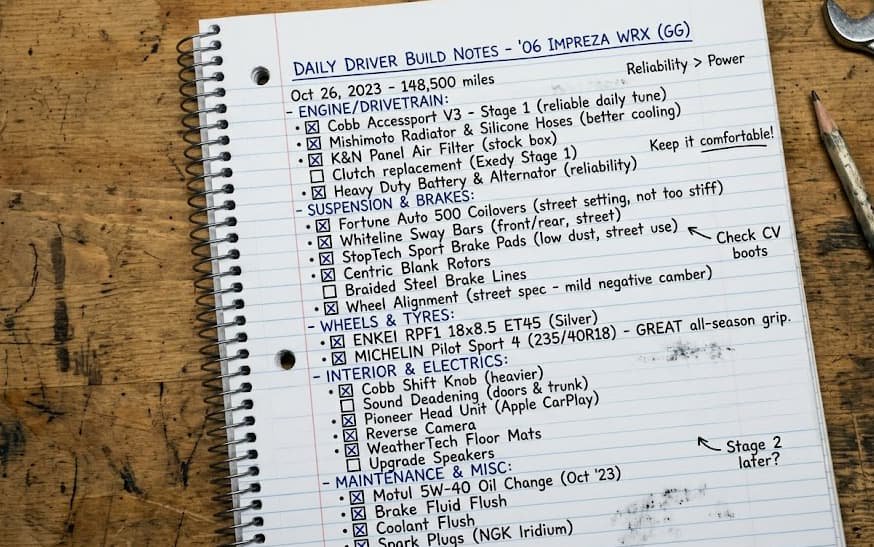
The most honest moment in a build happens when the owner admits where he actually drives. Not the track day he does once a year. Not the mountain run he dreams about. The Tuesday morning commute. The Saturday errands. The road he sees 90 percent of the time.
A car built for that road is a car that gets driven. A car built for a fantasy is a car that sits in the garage, too uncomfortable, too loud, too compromised to justify for a quick trip to the hardware store. I have seen both. The car that gets driven is always the better build, regardless of what the spec sheet says.
If your commute is eight miles of traffic and potholes, build a car that is comfortable, cool-running, and responsive in the midrange. If your weekend escape is a winding road two hours away, build a car that handles heat and sustained load. If your car carries a car seat, build a car that stops and steers predictably and does not beat up the passengers.
The car is supposed to serve your life. Your life is not supposed to serve the car.
The Bottom Line
The best suspension setup, the best power band, and the best tire compound are the ones that match the pavement under your wheels — not the pavement in someone else’s YouTube video.
Before you order another part, take a long drive on the roads you actually use. Pay attention to what bothers you. Where does the car feel unsettled? Where does it run out of breath? Where does it feel too stiff or too soft? The answers are your build plan. They have been there the whole time. You just had to listen.
A car built for the road it actually drives is a car that works. Everything else is a guess.