The Sequence Problem Nobody Talks About
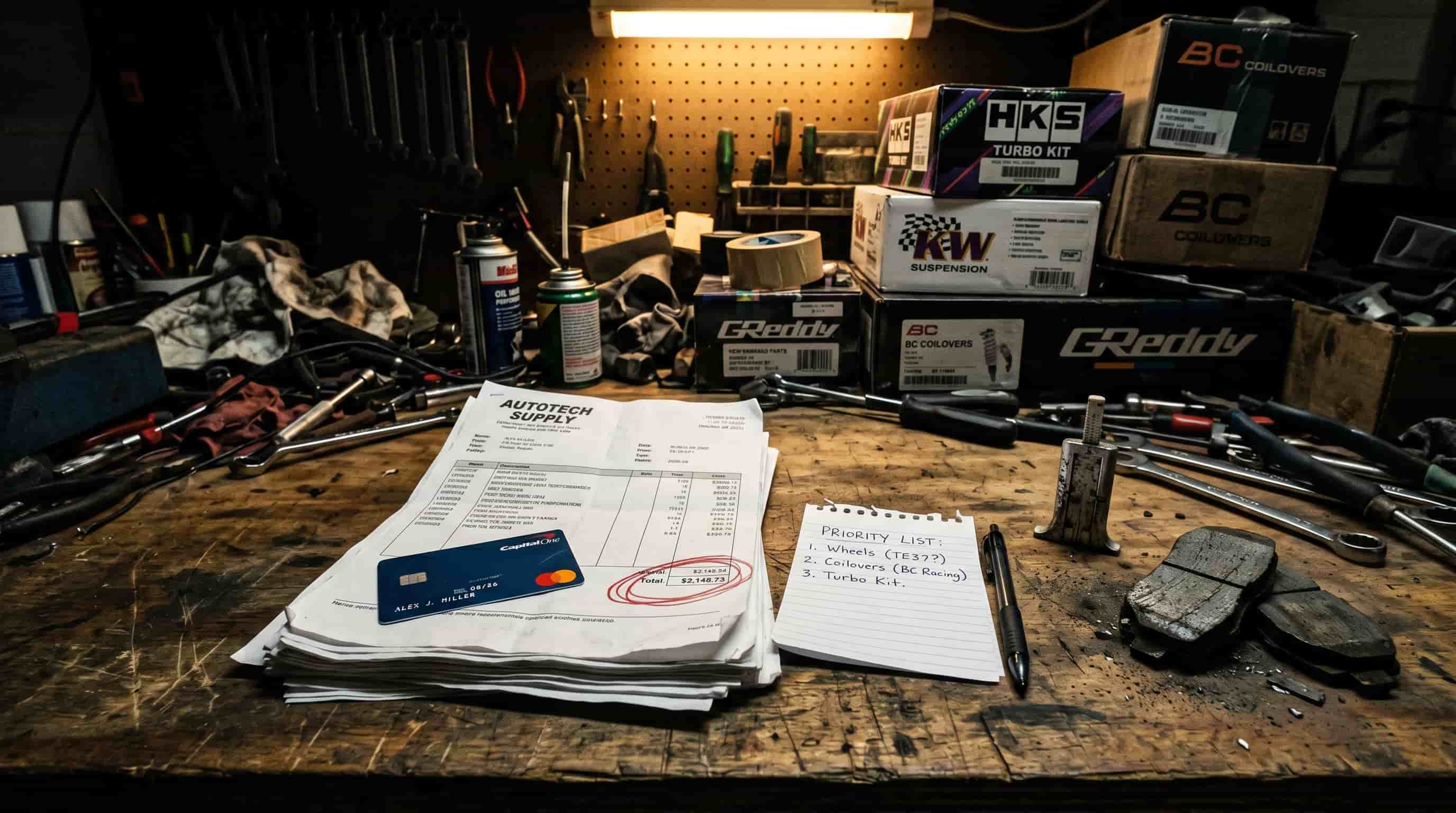
I have met hundreds of car guys who spent twenty thousand dollars to end up with a car that was worse than the one they started with. They were not stupid. They were not lazy. They worked hard for the money, researched every part, and bought quality components. What they did not do was spend the money in the right order.
The order of modifications is not a matter of preference. It is a chain of dependencies. A car is a mechanical system where every change affects the next change. Skip a step early on, and the later steps will not work the way they should. Spend the budget on the wrong items first, and the items that actually matter will get whatever is left over — or get skipped entirely.
I have corrected enough of these builds to see the pattern clearly. The mistake is always the same: they chased the parts that felt exciting instead of the parts that make the car work.
The Emotional Trap of the Wrong First Mod
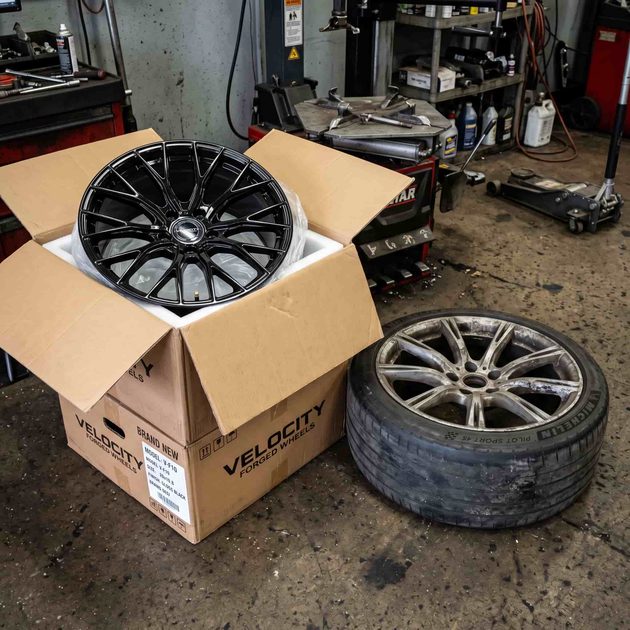
The wrong first modification is rarely a bad part. It is almost always a part the owner was excited to install — the one he could show off, hear, or feel instantly. Big turbo. Aggressive exhaust. Stiff coilovers. Wheels that filled the arches. These parts deliver a spike of satisfaction the moment the car fires up or rolls out of the garage.
The right first modifications are invisible and unglamorous. Tires that communicate. Brake pads that bite cold. Fresh fluids in every system. Bushings that replace the worn-out rubber the factory installed a decade ago. These changes do not photograph well. They do not change the way the car sounds. They change the way the car behaves, which is a sensation you can only experience from the driver’s seat, not from a parking lot conversation.
The emotional trap works like this: the owner spends his first two thousand dollars on a set of coilovers and an exhaust because those are the mods everyone asks about. He then realizes the car does not stop any better, and the tires now feel greasy because the stiffer suspension is exposing their lack of grip. The brake and tire budget has already been spent on the exhaust. He lives with a car that is loud, low, and terrifying to stop in the rain.
The Wrong Order vs. The Right Order
The table below is not a suggestion. It is a repair bill prevention tool. I have placed the typical enthusiast spending order next to the order that produces a car you will actually enjoy driving for more than six months.
Priority | What Most Guys Do | What Should Be Done |
|---|---|---|
1 | Wheels and tires (aesthetic choice) | Tires (performance choice based on roads and climate) |
2 | Cat-back exhaust | Brake pads and fluid flush |
3 | Lowering springs or coilovers | Replace worn suspension bushings, ball joints, tie rods |
4 | Cold air intake | High-performance alignment |
5 | Tune for more boost | Dampers and springs matched as a system |
6 | Big brake kit because the wheels need filling | Stainless brake lines and fresh DOT 4 fluid |
7 | Finally, good tires when the cheap ones wear out | Lightweight, properly-sized wheels if needed |
Notice what the right column prioritizes: contact with the road, the ability to stop, and the mechanical health of the suspension. These are the foundations. Without them, every other modification is a performance tax on a chassis that cannot use it.
A car with stock power, good tires, and fresh brakes is genuinely faster and safer than a car with 400 horsepower and four-year-old all-season rubber. The first car will stop shorter, turn in sharper, and inspire confidence. The second car is a liability with a loud exhaust.
The Cost of Doing It Backward
I once consulted for a young guy who had purchased a clean, ten-year-old turbocharged sedan. He had saved for a year and immediately spent his budget on a larger turbo kit with supporting mods, a set of budget coilovers, and a cat-back exhaust. He installed everything over several weekends. The car made 380 wheel horsepower on the dyno.
Within two months, he was in my shop with a list of complaints. The car tramlined on the highway. The brakes shuddered under hard stops. The clutch slipped if he rolled into the throttle below 3,000 rpm in third gear. The tires, which were the budget all-seasons the car came with, could not put the power down below 50 miles per hour. The coilovers were set too low, and the car rode on the bump stops over every bridge joint.
He had spent over six thousand dollars. Not one dollar of it had gone to the contact patches, the stopping hardware, or the suspension health. The car was objectively worse to drive than it had been stock. The fix required another three thousand dollars in tires, brake pads, a clutch, and suspension correction parts — money he did not have because he had already spent it on a turbo.
If he had started with tires, brakes, and a suspension refresh, the car on stock power would have been satisfying to drive. The turbo kit could have come later, after the chassis was ready for it. The build would have taken longer but produced a car worth keeping.
The Rule of Thirds
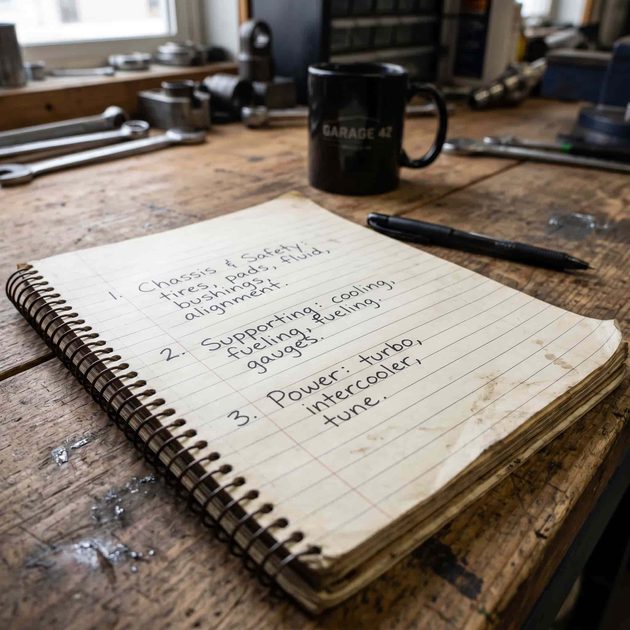
I have a simple budgeting rule for any street car build. It is not perfect, but it prevents the worst mistakes. Divide the total budget into three parts.
First Third: Chassis and Safety
Tires, brake pads, brake fluid, suspension bushings, alignment, and any worn steering components. This third makes the car safe, predictable, and connected to the road. It is not negotiable.
Second Third: Supporting Systems
Cooling, fueling, engine management, gauges, driveline. If you are adding power later, this third makes sure the engine will survive it. If you are not adding power, this third goes to making the car more durable and communicative.
Final Third: Power and Sound
Turbo, intercooler, exhaust, tune. These are the parts everyone wants to buy first. They should be bought last because they depend on everything above them. Adding power to a car with worn bushings and old brake fluid is like putting a stronger engine in a boat with a leaking hull. You will go faster, briefly, before something fails.
This rule forces patience. It forces the builder to earn the power by first building a car that can handle it. The cars I respect most — the ones I see still on the road years after their builds — were almost all built in this sequence.
What Happens When You Do It Right
A car built in the correct order reveals its character slowly. The first thousand miles on new tires and fresh brakes feel sharper than the car ever felt stock. The suspension refresh removes the slop you had learned to ignore. The alignment wakes up the steering. By the time you add power, the chassis is ready to use it. Every pound-foot of torque translates to forward motion instead of wheelspin, understeer, or a shudder through the steering column.
This kind of build does not produce dramatic before-and-after videos. There is no single weekend where the car transforms. What you get instead is a car that improves in steps, each one building on the last, without ever going backward. You do not waste money undoing mistakes. You do not sell the car six months later because you hate driving it.
The Bottom Line
The order of your parts list is more important than the parts themselves. A well-sequenced budget of five thousand dollars can produce a car that is satisfying, capable, and durable. A poorly-sequenced budget of fifteen thousand dollars can produce a car that is unpleasant, unreliable, and worth half what was spent on it.
Before you buy the turbo, look at your tires. Before you order the exhaust, check your brake pads. Before you drop the car, replace the bushings that have been on the car since it left the factory. Build the foundation first. The power will mean something when the chassis can use it.
A build that ignores the order of operations is not a build. It is a series of purchases, and the final result will feel exactly like that.