
The Mods That Actually Earn Their Keep
Most modifications make a car worse. This is not an opinion. It is a pattern I have watched repeat itself for twelve years in shops across New York and New Jersey. Someone buys a car they enjoy driving. They install a set of parts recommended by a forum thread with no mechanical context. The car gets louder, stiffer, and harder to live with. Six months later, it sits on marketplace with the phrase “too many mods to list.”
The problem is not modification itself. The problem is choosing mods that fight against the car instead of sharpening what it already does well. A good street mod removes a weakness without creating two new ones. It makes the car more engaging at normal speeds. It adds capability you can feel on an on-ramp, not just a dyno sheet.
The five mods below have passed the only test I care about. I have installed each one on real street cars. I have lived with them in traffic, on rough pavement, in the wet, and at speeds that do not require a track day waiver. They work.
1. A Proper Set of Tires
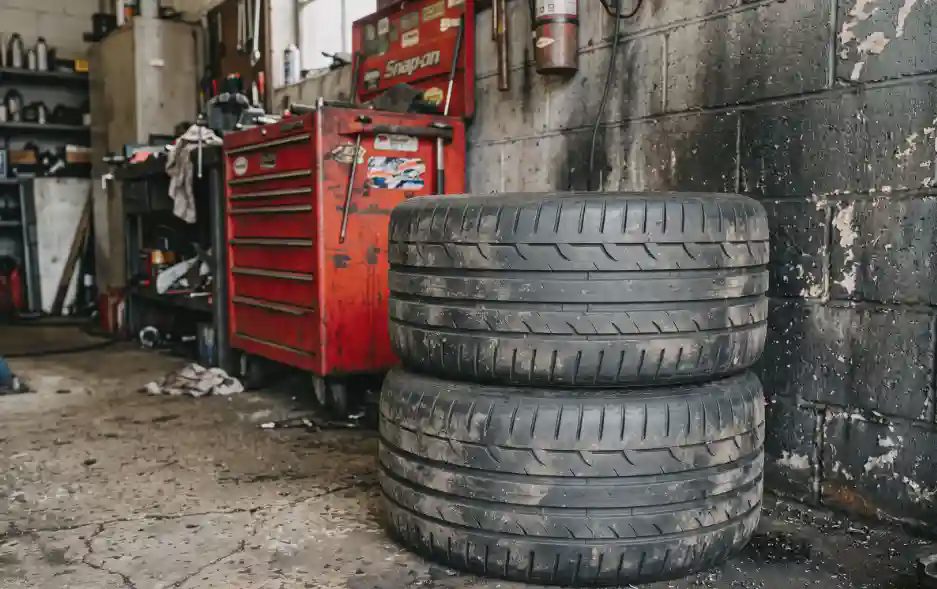
Not the widest tires. Not the stickiest 200-treadwear track compound that needs three laps to warm up. The right tire is one that communicates at street speeds, works in the rain, and does not punish you for an imperfect road surface.
A 300-treadwear summer performance tire like the Michelin Pilot Sport or Continental ExtremeContact will transform turn-in feel and mid-corner confidence without the noise, harshness, and cold-weather uselessness of an extreme performance tire. If the car never sees freezing temperatures, this is the single biggest improvement you can make. Tires are the only part of the car that touches the ground. Treat them like it.
2. Brake Pads That Bite Cold
A big brake kit looks impressive behind aftermarket wheels. It will also empty your wallet and often requires a larger wheel to clear the caliper — which means new tires, which means more unsprung weight, which means a degradation in ride quality you did not expect.
What most street cars actually need is a pad compound that works from the first stop. Factory pads are designed for low dust and low noise, not for repeated hard braking. A set of performance street pads — something in the Hawk HPS or Ferodo DS2500 range — will improve initial bite, raise fade resistance, and work perfectly with stock rotors and calipers. The pedal firms up. The car stops with more authority. You notice it on the first cold stop sign of the morning.
3. A Short-Throw Shifter That Fits Your Hand
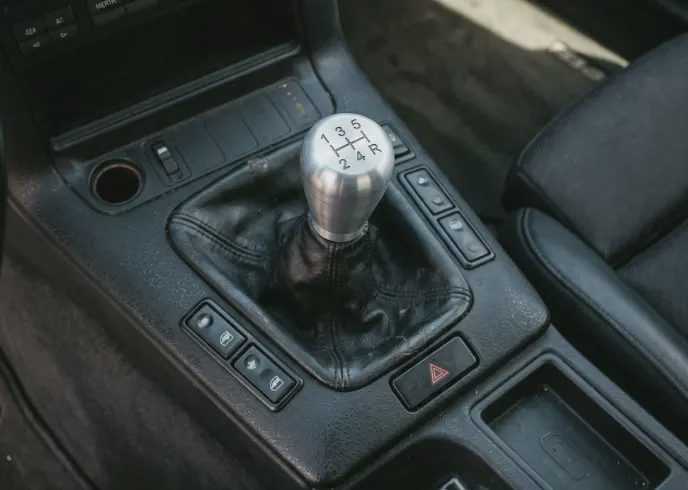
This is a mod that costs relatively little, installs in an afternoon, and changes every interaction you have with the car. A well-designed short-throw shifter reduces the distance between gates without making engagement notchy or vague. The key phrase is “well-designed.” The cheap ones rattle. The expensive ones from companies that actually engineer their linkage geometry — think CAE or IRP — feel like a rifle bolt.
The goal is not to shift faster. The goal is to remove slop. A precise shifter makes the driveline feel more direct. It adds mechanical connection without adding noise or vibration if installed correctly. You will enjoy it at 25 mph in your neighborhood as much as at 70 mph on a highway merge.
4. A Limited-Slip Differential
If your car did not come from the factory with a proper limited-slip differential, this is the mod that will change its personality more than any horsepower increase ever could. An open differential sends power to the wheel with the least grip. That means one wheel spinning out of a tight corner while the other does nothing. It is inefficient, frustrating, and makes a car feel slower than it is.
A helical or clutch-type limited-slip differential locks the rear axle under load and distributes torque to the wheel that can use it. Corner exit grip improves dramatically. The car rotates under power instead of pushing wide. Traction in wet conditions becomes predictable rather than terrifying. Installation is not cheap, and it is not a weekend job for most home builders. But the payoff is permanent.
5. A Custom Alignment That Matches Your Roads
Factory alignment specs are a compromise designed to produce safe understeer for the lowest common denominator of driver. They are not optimized for feel, for tire wear under aggressive driving, or for the roads you actually drive.
A performance alignment — set by a shop that understands what the numbers do, not one that just turns bolts until the screen turns green — will change how the car behaves. A small increase in negative camber improves front-end grip without destroying tire life if toe is set correctly. A slight toe-in at the rear stabilizes the car under braking. The steering wakes up. The car feels planted and eager rather than lazy and resistant.
The Summary Table
Mod | What It Improves | What It Does Not Ruin |
|---|---|---|
Performance summer tires | Grip, steering feel, wet stability | Ride quality, daily usability |
Cold-bite brake pads | Stopping power, pedal feel | Rotor life, low-speed manners |
Quality short-throw shifter | Shift precision, mechanical connection | Interior noise, reliability |
Limited-slip differential | Corner exit traction, wet control | Straight-line comfort, NVH |
Custom street alignment | Turn-in, stability, tire wear | Ground clearance, suspension travel |
None of these mods require cutting up the interior. None of them make the car louder. None of them turn a street car into a track refugee that beats you up on the way to work. They simply make the car better at being a car.
A good build is not a collection of parts. It is a series of decisions that respect what the engineers got right and fix what they had to leave on the table. Start with these five. Drive the car for a thousand miles. Then decide if you actually need more.