The Number Everyone Wants
The question comes up in every shop, every forum thread, every direct message from a stranger who just bought his first turbo car: “How do I make 500 wheel horsepower?” Not 400. Not a number that makes sense for his commute, his fuel budget, or his driveline. Five hundred. It is a round number, a threshold, a status marker. It sounds serious without sounding unattainable.
What almost no one asks is the question that matters: “What does 500 wheel horsepower actually cost to build, maintain, and live with on a street-driven car?”
The aftermarket sells the number cheap. A turbo kit here, a set of injectors there, a tune, a dyno sheet, and you are there. On paper. For one pull. In a climate-controlled room with the hood open. The fantasy version of 500 wheel horsepower costs whatever the parts list adds up to. The reality version costs twice that, requires maintenance you are not planning for, and will still break things you did not know were weak links.
I have built, diagnosed, and repaired enough 500-wheel-horsepower street cars to know the full invoice. Here it is.
The Four Dimensions of Cost
The cost of 500 wheel horsepower is not one number. It is four numbers stacked on top of each other. Ignore any one of them, and the car becomes a ticking clock.
1. The Build Budget
This is what everyone plans for: the turbo, intercooler, fueling, engine management, exhaust, and tune. On most platforms, a reliable 500 wheel horsepower on pump gas requires a built engine or a factory block that is known to handle the cylinder pressure. Stock internals on a motor rated for 300 wheel horsepower from the factory will not survive double the output indefinitely. The ring gaps will butt, a piston will crack, or a rod will bend. It is not a question of if. It is a question of mileage.
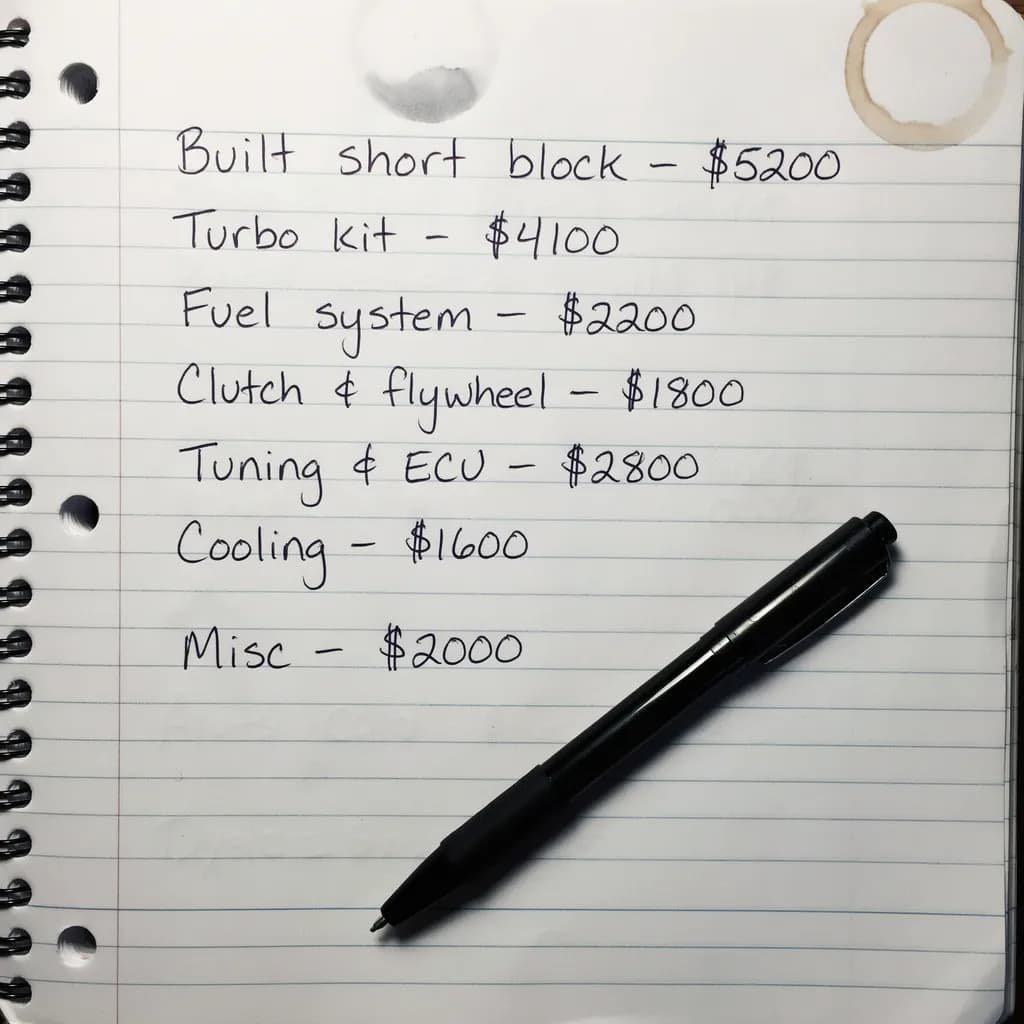
A realistic build budget for a properly done 500 wheel horsepower setup — including a built short block, a properly sized turbo system, fueling, intercooling, engine management, and tuning — starts around twelve thousand dollars and climbs past twenty thousand on some platforms. If you are paying a shop for labor, add another thirty to fifty percent. The twelve-thousand-dollar number is for people who can do the work themselves and already own the tools.
2. The Maintenance Budget
A 500-wheel-horsepower engine generates enormous heat and cylinder pressure. Oil changes must happen more frequently, and the oil must be a high-zinc, high-temperature formulation. Spark plugs become a consumable item, replaced every ten to fifteen thousand miles instead of every sixty thousand. Ignition coils fail more frequently under increased cylinder pressure. Valve springs fatigue faster. Turbocharger oil seals eventually weep. The clutch, if it holds the torque, wears faster and requires replacement on a schedule you will not enjoy.
I budget roughly three to four times the stock maintenance cost annually for a street-driven 500-wheel-horsepower car. That means if the stock version of the car cost eight hundred dollars a year in consumables and routine maintenance, the modified version will cost twenty-five hundred to three thousand. This is not a guess. This is what I have tracked across multiple customer builds.
3. The Drivability Cost
A car that makes 500 wheel horsepower on a dyno does not make 500 wheel horsepower in traffic at part throttle. What it does make is heat, noise, and a series of compromises that the owner must live with every day. The clutch is heavier. The driveline has more lash. The fuel economy drops into single digits under load. The cooling system works harder, and the radiator fans run constantly in summer traffic. The car smells like fuel and hot oil after a hard pull. The ride quality, if the suspension has been stiffened to manage the power, is harsher.
These are not problems that can be tuned out. They are physical consequences of burning twice the air and fuel of a stock engine. The car becomes more capable and less pleasant in direct proportion. Some owners tolerate this. Most do not expect it.
4. The Longevity Cost
A factory engine is engineered to last 150,000 to 200,000 miles with reasonable maintenance. A modified engine making twice the factory output will not. The rings, bearings, valve guides, and gaskets are all operating closer to their mechanical limits. Detonation events that a stock engine shrugs off can crack a piston in a high-compression, high-boost motor. A single bad tank of fuel can do thousands of dollars in damage.
A well-built 500-wheel-horsepower engine, properly tuned and maintained, can last 50,000 to 80,000 miles before requiring a teardown. Some last longer. Many last less. The range depends on how the car is driven, how often the oil is changed, and whether the tune has adequate protection tables. The point is not that the engine will fail tomorrow. The point is that the service life is a fraction of what the factory delivered.
The Cost Table
Cost Category | What the Aftermarket Tells You | What the Garage Actually Requires |
|---|---|---|
Engine | “Stock block handles it” | Forged internals or a sleeved block: $4,000 – $8,000 |
Turbo system | “Bolt-on kit, everything included” | Turbo, manifold, wastegate, BOV, charge pipes, custom fabrication: $3,500 – $6,000 |
Fuel system | “Injectors and a pump” | Pump, injectors, lines, regulator, fuel pressure sensor, surge tank in some cases: $1,500 – $3,000 |
Cooling | “Front-mount intercooler” | Intercooler, radiator, oil cooler, ducting, fan shroud: $1,500 – $3,000 |
Engine management | “A tune” | Standalone ECU or piggyback, sensors, wiring, dyno time, street tuning: $1,500 – $3,500 |
Driveline | “Clutch” | Clutch, flywheel, transmission upgrades, axles, differential: $3,000 – $8,000 |
Annual maintenance | “Same as stock” | Frequent oil changes, plugs, coils, valve spring checks, gasket inspections: $2,500 – $3,500/year |
Unexpected repairs | “It’s reliable” | Tow bills, retunes, replacement parts, diagnostic time: $1,000 – $5,000/year reserved |
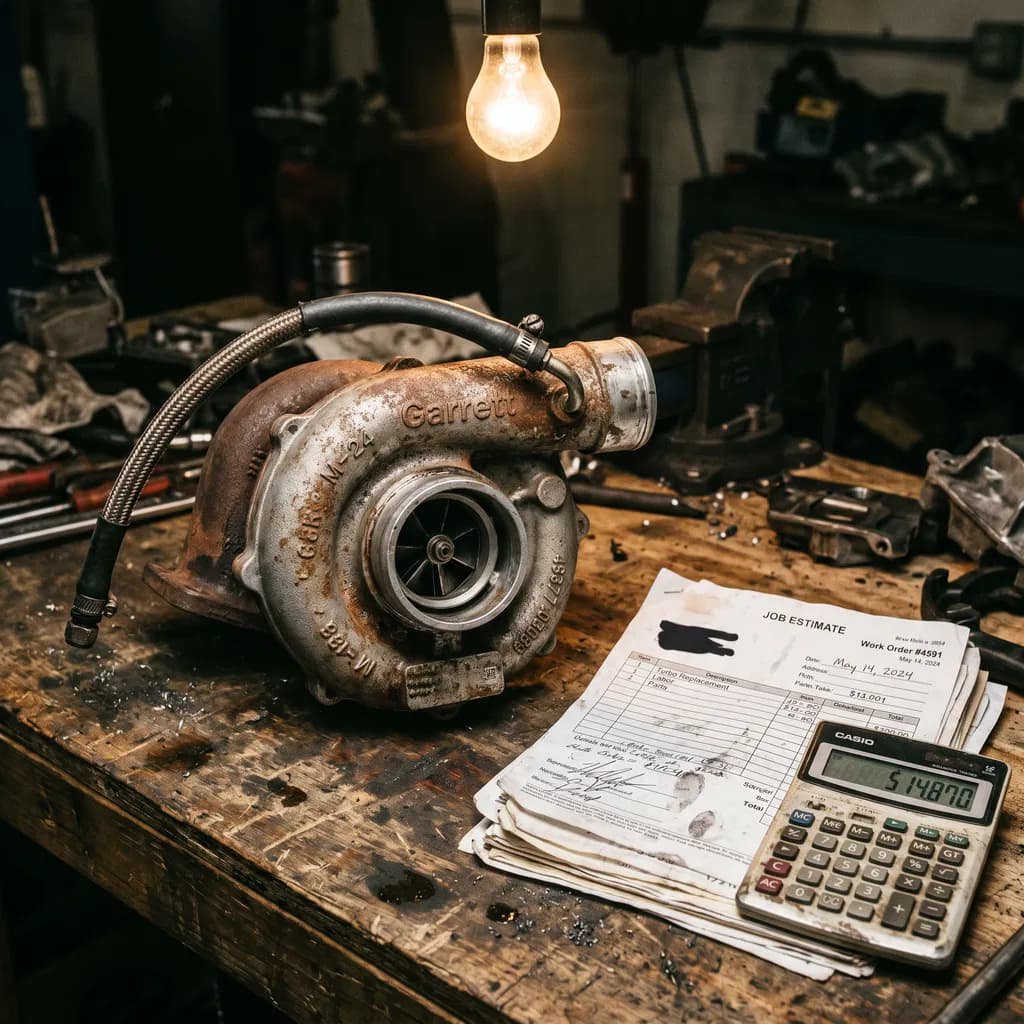
Add the build column. Double it for labor if you are not doing the work yourself. Now add two years of maintenance and a contingency fund. The number on the calculator in the cover image is not an exaggeration. It is a realistic total for a car that runs properly and does not grenade itself in the first year.
The Cars That Do It Right
There is nothing wrong with chasing 500 wheel horsepower. I have built cars at that level that were satisfying to drive and survived years of street use. What those builds had in common was an owner who understood the full cost before turning a single wrench.
They did not cheap out on the rotating assembly. They did not skip the fuel system upgrades. They did not tune for peak power and ignore part-throttle drivability. They did not pretend the stock clutch, stock axles, and stock cooling system would handle double the factory output. They budgeted for the whole system, not just the shiny parts.
They also drove the car with mechanical sympathy. They let the oil warm up before asking for boost. They monitored coolant and intake air temperatures. They changed fluids early and often. They treated the engine like something that had to last, not something they could afford to replace.
The Bottom Line
Five hundred wheel horsepower is achievable. It is also expensive, demanding, and unforgiving of shortcuts. The parts list is the cheapest part of the equation. The maintenance, the drivability compromises, and the shortened service life are the real price of admission.
If you are ready to pay that price — in money, in wrenching hours, and in the daily tradeoffs that come with a high-strung street car — then build it properly and enjoy every pound-foot. If you are not ready to pay that price, build for 350 or 400 wheel horsepower instead. A car that makes 400 and actually runs for 80,000 miles is faster than a car that made 500 once and has been on jack stands for the last three years.
A dyno number is a receipt for one moment in time. A build that survives the street is a ledger of every good decision made before that pull. Know the cost before you sign.