The Knob Everyone Wants to Turn
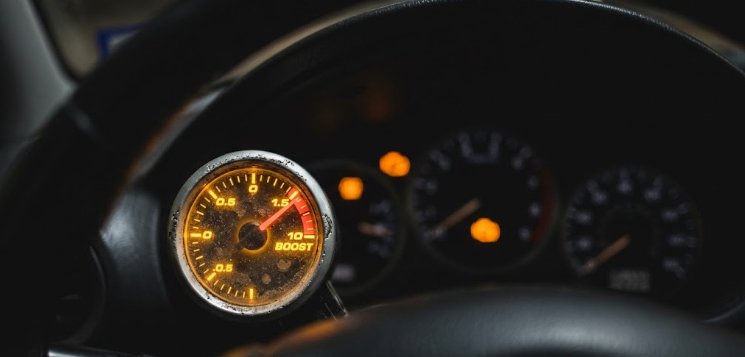
A boost controller is the most dangerous tool in the aftermarket. It is not dangerous because it is complicated. It is dangerous because it is simple. Twist a dial, push a button, load a new map on a handheld programmer — and the car makes more power. Instantly. No jack stands. No parts to install. Just more pressure, more airflow, more torque.
That immediacy is intoxicating. It is also the reason I have diagnosed more blown engines from boost greed than from any other single cause. The power arrives before the supporting mods do. The torque spike cracks a ring land before the tuner has finished smoothing the fuel table. The intercooler heat-soaks on the third pull because it was sized for 14 psi, not 22.
More boost always costs more than the boost controller did. The invoice just arrives later.
What Actually Happens When Boost Goes Up
Raising boost pressure does not simply add power in a straight line. It increases the load on every component that touches the intake charge, the combustion event, and the exhaust stream. Most of those components were not designed for the new load. They fail in sequence.
Heat
Compressing air heats it. A turbocharger compresses air. At 10 psi, the compressor outlet temperature on a typical street turbo might be 200 degrees Fahrenheit. At 18 psi, it can pass 300 degrees before the intercooler sees it. If the intercooler is undersized or airflow through the core is restricted at street speeds, intake air temperatures climb into a range where the ECU pulls ignition timing to protect the engine. Power drops. The driver turns up the boost again to compensate. The cycle continues until detonation wins.
Fuel Demand
More air requires more fuel. The fuel pump, injectors, and pressure regulator must supply enough volume at the required pressure under sustained load. A fuel pump that delivers adequate flow at 14 psi may go lean at 18 psi under a long pull in third gear. A lean condition at peak torque raises cylinder temperatures rapidly. Pistons do not forgive.
Cylinder Pressure
Boost adds cylinder pressure. Cylinder pressure adds stress to pistons, rings, ring lands, rod bearings, and head gaskets. The factory ring gap was set for stock boost levels. Under high heat and high cylinder pressure, the rings expand until the ends touch. The ring land cracks. The engine starts consuming oil. The owner notices the smoke before he notices the compression loss.
Exhaust Gas Temperature
More boost means more exhaust mass flow. If the turbine housing and exhaust system cannot evacuate the additional volume efficiently, backpressure rises. High backpressure increases exhaust gas temperature. Sustained high EGT erodes exhaust valves, damages turbine wheels, and accelerates oil degradation.
The Cascade Failure Table
What They Did | What They Expected | What Actually Happened |
|---|---|---|
Turned boost from 12 to 20 psi | More power, same reliability | Detonation from elevated intake air temps |
Kept the stock intercooler | “It’ll be fine on the street” | Heat soak after two pulls, timing pulled, power lost |
Left the factory fuel pump | “The injectors have headroom” | Fuel pressure dropped at high RPM, lean condition, melted piston |
Ran pump gas without octane monitoring | “93 octane is enough” | Knock on a hot day with a bad tank of fuel |
Kept the stock clutch | “It held the stock power fine” | Clutch slip at peak torque, glazed flywheel |
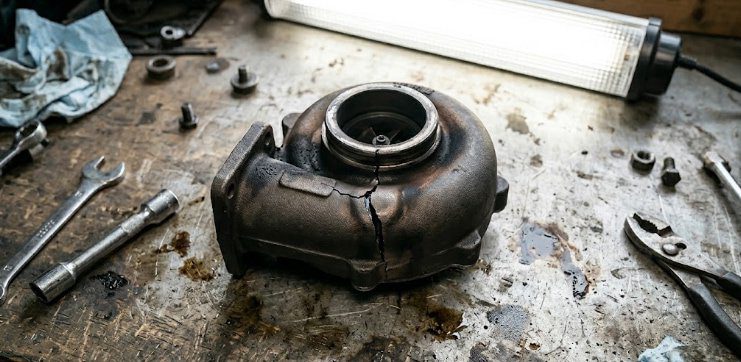
Ignored exhaust backpressure | “The turbo is rated for this” | High EGT, cracked turbine housing, burnt exhaust valve |
None of these failures happened because the parts were low quality. They happened because the system was asked to handle load it was not designed for. The boost controller did its job. The supporting parts did not get the chance.
The Supporting Mods That Must Come First
If you are planning to raise boost beyond the factory turbo’s efficiency range or beyond what the stock block can safely manage, the following items are not optional. They are the barrier between you and a very expensive engine-out repair.
1. Intercooler Upgrade
The intercooler must be sized for the target boost level and the airflow available at street speeds. A massive bar-and-plate core that works beautifully on the highway may heat-soak in traffic because there is not enough airflow to shed the heat. Choose an intercooler matched to your driving conditions, not your dyno ambitions.
2. Fuel System
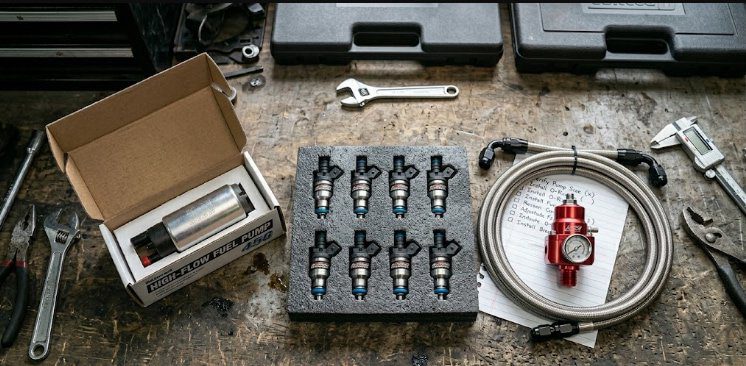
Pump, injectors, and pressure regulator must be capable of supplying the required fuel volume at the target boost pressure plus a safety margin of at least 15 percent. Install a fuel pressure sensor and log it. A dropping fuel pressure trace under load is a warning sign that must not be ignored.
3. Engine Management and Sensors
The ECU can only protect the engine if it can see what is happening. A wideband oxygen sensor, an exhaust gas temperature probe in the manifold, and a knock sensor strategy that is actually calibrated for the engine are minimum instrumentation. Tune the protection tables as carefully as the power tables.
4. Cooling System
More power generates more heat. The radiator, oil cooler, and intercooler all compete for airflow behind the bumper. If coolant temperatures climb above safe limits during sustained load, you are not managing the thermal load of the power you already make. Adding boost will make it worse.
5. Driveline
Clutch, transmission, axles, and differential were engineered for a torque ceiling. Exceed that ceiling repeatedly, and something breaks. Often it is the clutch first. Sometimes it is an axle on a hard launch. Neither failure is the car’s fault.
The Conversation I Have Repeatedly
A customer once asked me to diagnose a misfire on his turbocharged four-cylinder. The car had a larger turbo, a front-mount intercooler, and a tune that made 350 wheel horsepower on a Dynojet. The owner was proud of the number. The car had been running this setup for six months.
I pulled the spark plugs. Cylinder three showed aluminum speckling on the electrode — classic detonation damage. I borescoped the cylinder. The piston crown was pitted at the edge. The ring land was still intact, but it was a matter of time. I asked the owner what boost level he was running.
“Twenty-two pounds.”
I asked what fuel system upgrades he had done.
“Stock pump. The tuner said it was fine.”
The tuner had seen acceptable fuel pressure during the dyno session in a 70-degree room with the hood open and a fan blowing on the intercooler. The tuner had not seen the car on a 95-degree day, heat-soaked after 30 minutes in traffic, pulling onto the highway with a tank of questionable 93 octane. The fuel pump, asked to deliver at 22 psi under those conditions, could not keep up. The engine leaned out. The detonation started. The damage accumulated.
The fix was a new short block, a proper fuel system, and a retune. The cost of doing it right the first time would have been a fraction of the cost of doing it twice.
The Rule I Enforce
On any build I tune or consult on, the rule is simple: boost increases only after the supporting systems have been verified. The intercooler must be logged under real driving conditions. The fuel system must be tested at the target boost level. The cooling system must hold safe temperatures during sustained load. The driveline components must be rated for the torque the engine will produce.
If one of those conditions is not met, the boost controller stays at wastegate pressure. I do not care how much power the turbo can theoretically make. I care what the engine can survive.
The Bottom Line
Boost is not free. Every psi adds thermal load, mechanical stress, and fueling demand. The power arrives instantly. The damage arrives later, quietly, during a hot restart or a long highway pull or a moment when the ECU cannot pull enough timing to save the engine.
A build that survives boost is a build that respects boost. Turn it up only after the system is ready. If the supporting parts are not in place, you are not tuning. You are gambling.
A boost controller is not a power switch. It is a stress dial. Treat it with the fear it deserves.